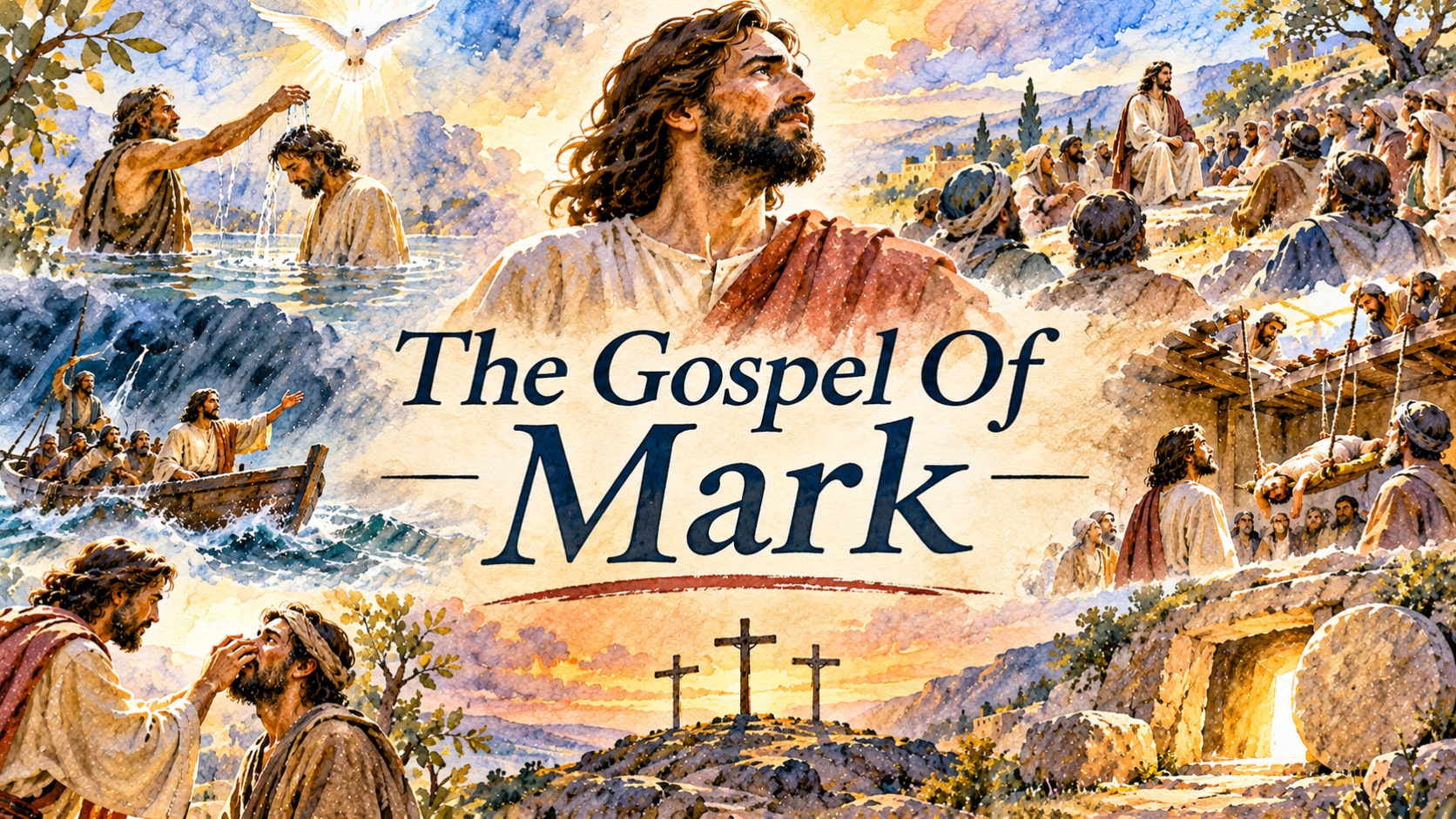
The Gospel of Mark, the second book in the New Testament, is traditionally ascribed to John Mark, a companion of the apostle Peter. It is believed to have been written between 50 and 70 AD, making it one of the earliest accounts of the life, ministry, death, and resurrection of Jesus Christ.
Scholars suggest that Mark was likely written in Rome or Palestine, given its references to local geography and customs. Its primary audience appears to have been Gentile Christians, possibly in Rome, as it includes explanations of Jewish customs and Aramaic terms.
The Gospel of Mark is written in Greek, indicating that it was intended for a Greek-speaking audience. The style of Mark is characterized by its fast pace and vivid storytelling, often using vivid verbs like “immediately” to move the narrative along swiftly. Mark’s Gospel focuses on Jesus’ actions and miracles more than his teachings, portraying him as a powerful and compassionate figure who ultimately suffers and dies as a sacrifice for humanity’s sins.
Genre
The Gospel of Mark is a Greco-Roman biography, specifically a form of ancient biography known as “bios” in Greek. This genre of literature was common in the ancient Mediterranean world and typically focused on the life, character, and deeds of a notable individual.
Mark’s Gospel fits this genre by presenting a narrative account of the life, ministry, death, and resurrection of Jesus Christ. It emphasizes Jesus’ actions more than his teachings and includes vivid details of his miracles, interactions with others, and the events leading up to his crucifixion and resurrection.
While Mark’s Gospel shares similarities with other ancient biographies, it also has unique features, such as its fast-paced narrative style and emphasis on Jesus’ authority and power. Overall, understanding Mark as a form of ancient biography helps us appreciate how the author shaped the story of Jesus to convey specific theological and literary goals to his audience.
Literary Context
The literary context of the Gospel of Mark can be understood by examining its overall structure, themes, and narrative style. Mark is the shortest of the four Gospels and is known for its fast-paced, action-packed narrative. Here are some key elements of its literary context:
- Structure: Mark is divided into distinct sections that focus on different aspects of Jesus’ life and ministry. These sections often begin with a narrative introduction or summary statement. For example, Mark 1:1-13 introduces the ministry of John the Baptist and the baptism of Jesus, setting the stage for Jesus’ public ministry. The subsequent sections of the Gospel detail Jesus’ teachings, miracles, conflicts with religious leaders, and ultimately, his death and resurrection.
- Themes: Several themes run throughout the Gospel of Mark, including the kingdom of God, discipleship, suffering, and the identity of Jesus. Mark portrays Jesus as a powerful and compassionate figure who brings the kingdom of God near through his teachings and miracles. The disciples are called to follow Jesus and learn from his example, even in the face of opposition and suffering.
- Narrative Style: Mark’s Gospel is characterized by its vivid storytelling and use of literary techniques such as irony, repetition, and dramatic tension. Mark often uses the literary device of the “Markan sandwich,” where he interrupts one story with another, creating a layered narrative that adds depth to the text.
- Audience: Scholars believe that Mark’s Gospel was written for a predominantly Gentile audience, possibly in Rome. Mark includes explanations of Jewish customs and Aramaic terms, indicating that he was writing for readers who were not familiar with the Jewish context of Jesus’ ministry.
- Purpose: Mark’s Gospel aims to present a compelling portrait of Jesus as the Son of God and the promised Messiah. Mark emphasizes Jesus’ authority over sin, sickness, and death, inviting readers to respond in faith and discipleship. The Gospel ends abruptly with the empty tomb, leaving readers to ponder the implications of Jesus’ resurrection and the call to follow him.
Overall, the literary context of the Gospel of Mark reveals a carefully crafted narrative that seeks to communicate the significance of Jesus’ life, death, and resurrection to a diverse audience. Mark’s Gospel challenges readers to consider their own response to Jesus’ identity and mission, inviting them to become disciples who follow him in faith and obedience.
Historical Context
The historical context of the Gospel of Mark is essential for understanding its message and significance. Here are some key aspects of the historical context of the book:
- Date and Authorship: Scholars generally date the Gospel of Mark to around 65-70 AD, making it one of the earliest accounts of Jesus’ life and ministry. Tradition ascribes authorship to John Mark, a companion of the apostle Peter, who may have written the Gospel in Rome, or another location influenced by Peter’s teaching.
- Roman Empire: The Gospel of Mark was likely written during a period of Roman rule, possibly during the reign of Emperor Nero. This was a time of political and social unrest in the Roman Empire, with tensions between the ruling authorities and various religious and cultural groups.
- Jewish-Roman Relations: The relationship between the Jewish community and the Roman authorities was complex. The Gospel of Mark reflects this context, portraying Jesus’ interactions with Jewish religious leaders, Roman officials, and ordinary people in Judea and Galilee.
- Persecution of Christians: The Gospel of Mark may have been written during a period of persecution of Christians in Rome, such as the persecution under Nero following the Great Fire of Rome in 64 AD. This context of persecution may have influenced Mark’s portrayal of Jesus’ suffering and the call to discipleship in the face of opposition.
- Jewish-Roman War: The Gospel of Mark was written shortly before or during the Jewish-Roman War (66-70 AD), which resulted in the destruction of the Temple in Jerusalem in 70 AD. This event would have had significant implications for the early Christian community, as many of Jesus’ prophecies about the destruction of the Temple would have been seen as fulfilled.
- Spread of Christianity: The Gospel of Mark was written at a time when Christianity was still a relatively small and persecuted movement. Mark’s Gospel reflects a missionary outlook, emphasizing the universal significance of Jesus’ message and ministry.
Understanding these historical contexts helps us appreciate the Gospel of Mark as a document written to address the concerns and challenges faced by early Christians in the Roman Empire. Mark’s portrayal of Jesus as the suffering Messiah and the call to discipleship in the face of opposition would have resonated with early Christian communities struggling to maintain their faith in challenging circumstances.
Outline
I. Introduction (Mark 1:1-13)
- The ministry of John the Baptist
- The baptism of Jesus
- The temptation of Jesus in the wilderness
II. Early Galilean Ministry (Mark 1:14-3:6)
- Jesus’ preaching and healing in Galilee
- Controversies with religious leaders over Sabbath observance and authority
III. The Parables and Miracles of Jesus (Mark 3:7-6:6a)
- Various parables illustrating the kingdom of God
- Miracles of healing and nature, demonstrating Jesus’ authority
IV. Ministry Beyond Galilee (Mark 6:6b-8:30)
- Jesus’ rejection in his hometown of Nazareth
- Feeding of the 5,000 and walking on water
- Teachings on true defilement and the nature of the Messiah
V. The Journey to Jerusalem (Mark 8:31-10:52)
- Jesus predicts his death and resurrection
- Teachings on discipleship, humility, and service
- Healing of Bartimaeus and encounter with Zacchaeus
VI. Passion Week in Jerusalem (Mark 11:1-15:47)
- Triumphal entry into Jerusalem
- Cleansing of the temple
- Controversies with religious leaders and teachings in the temple
- The Last Supper and betrayal by Judas
- Jesus’ arrest, trial, crucifixion, and burial
VII. Resurrection and Commission (Mark 16:1-20)
- The discovery of the empty tomb
- Jesus’ appearances to his disciples
- The Great Commission to preach the gospel to all nations